Robbing
1
View details
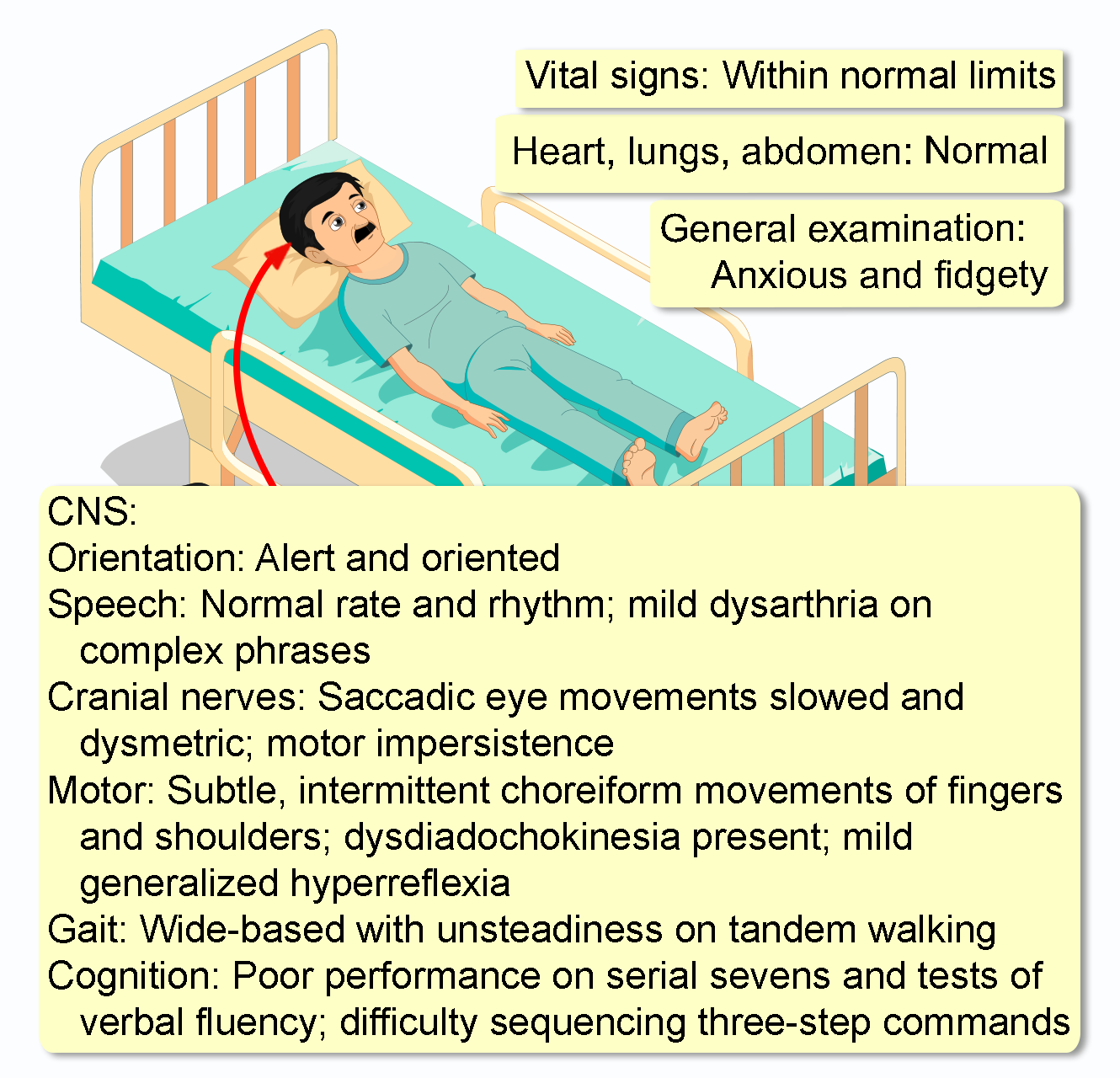
A 42-year-old man is brought to your office by his wife. She is concerned about his personality changes and clumsiness. His wife reports that over the past two years, he has become increasingly irritable and apathetic. This is uncharacteristic for him. He is an accountant and has started making unusual errors at work. She has also noticed he is more fidgety and drops things frequently. He displays brief, jerky, non-repetitive movements of his fingers and face. He often tries to mask these by incorporating them into a seemingly purposeful gesture. The patient himself is resistant to the consultation. He insists he feels “perfectly fine” and attributes any issues to work stress. His medical history is unremarkable, with no prior psychiatric history. His father was diagnosed with a “movement disorder” in his 40s. He was institutionalized for progressive dementia and passed away from pneumonia at age 55. His paternal grandfather had a similar history, but no formal diagnosis was established.